Monday, March 05, 2007

The Blue Room


A Mini-drama
by
Trusty Editor Croftie


Photograph by
The Germanatrix


CHARACTERS
Mr. Smith a man in his late fifties
Joe a man in his late twenties

Scene 1


MR. SMITH is standing at the urinal. The door opens. JOE ENTERS. The men are preoccupied and do not see each other. JOE looks up, sees MR. SMITH, and turns to leave.

MR. SMITH
(Looks up)
Joe! How long have you been here?

JOE
I was just leaving.

MR. SMITH
I meant here at the company. Six years now?

JOE goes to the furthest urinal away from MR. SMITH. He unzips.

JOE
Five, actually. Only five.

MR. SMITH
I was just thinking—I don’t tell you often enough that I appreciate you.

JOE
Thank you.
(Zips up without using the urinal)

MR. SMITH
(Advances toward JOE)
I’d like to show you my appreciation.

JOE
Could it wait until later?

MR. SMITH
I want to speak to you now. Where it’s private.
(Pause)
I had to let Jim go today.

JOE
I thought he quit.

MR. SMITH
No. I let him go… Did he tell you why?

JOE
No.

MR.SMITH
Good. You’re not supposed to talk to someone who’s been fired, anyway. We sent him straight home and we’ll ship his things to him later. Security reasons.

JOE
I know.

MR.SMITH
Look Joe, I need a good man to fill Jim’s position. And you’re the first man I saw this morning.
(Laughs)
That was a joke.

JOE
(Laughs nervously)

MR. SMITH
Don’t take everything so seriously. Except your job. You should always take your job seriously. I want to make you senior director.

JOE
Oh… thank you. I appreciate the offer. But I should discuss this with Sarah.

MR. SMITH
What’s to discuss? You’ll have an office. Wouldn’t you like an office?

JOE
I’m really not sure.

MR. SMITH
Since when does a man have to discuss his career with his girlfriend?

JOE
She’s my fiancée.

MR. SMITH
So?

JOE
It’s just that… I’m not sure how much longer we’ll be in Chicago. We’re getting married next month and we’re planning to move to the East Coast.

MR. SMITH
I see.

JOE
I’m sorry.

MR. SMITH
I’m disappointed in you, Joe. I should let you go right now.

JOE
Look, I need to start doing what I want to do. I need to start writing…

MR. SMITH
That’s not much of a career.

JOE
I’m almost thirty. When am I ever going to get to do what I want to do?

MR. SMITH
Life isn’t about getting what you want. Marriage is definitely not about getting what you want. I’m sure Sarah would agree.

JOE
She’s supportive.

MR. SMITH
Her father’s a lawyer. When you’re a writer, will he be proud to call you “son”?

JOE
Hey, hold on a minute.

MR. SMITH
(Puts his arm around JOE’S shoulders. A fatherly gesture.)
I don’t think you’ve thought this through. Are you sure you want to be tied down right now?

JOE
I’ve got to get back to my desk.
(Turns to leave)

MR. SMITH
That’s right. Turn your back. Just like you did to Ben.

JOE
He left me!

MR. SMITH
Are you too good for us? Is that it? I’ll tell you something—this company was good enough for Ben.

JOE
I’m not like my father.

MR. SMITH
You’re right. Your father was a good man. He paid for that fancy college you went to. And he sent you with our money. Now you’re too good for us? You owe me.

JOE
I don’t owe you anything. And you don’t know anything about my father.

MR. SMITH
Give me one good reason, Joe—just one reason you’re too good for this company.

JOE
I hate it. There. My father hated this place, and I hate it, too. I hate coming to work every morning. I hate swiping my card at the back door and walking down that gray hallway. I hate staring at the computer. I hate the people who work here. I hate sitting in my cubicle with nothing to do for nine hours until it’s time to go home. And I hate how bad I feel when I finally leave at the end of the day. And I hate going home because I know I’ll just have to come back tomorrow. I hate it. I can’t stay here. My father stuck it out until he died. I don’t even know how I’ve lasted five years.

MR. SMITH
Well.
(Pause)
Congratulations on your wedding. I’ll box up your things and have them sent to you in the morning.

MR. SMITH EXITS. JOE stands quietly for a long pause. Then he smiles and begins to leap about in absolute joy.


FADE OUT


Scene 2

SARAH is sitting at the kitchen table with the phone book. She’s taking notes on a legal pad.

JOE ENTERS, in the process of removing his tie. Dumps his coat over a chair.


JOE
(Kisses SARAH on the cheek)
I’ve got news. Great news. Actually, it might not be great news right now, but it will be.

SARAH
Hang up your coat.

JOE
I will.

SARAH
No you won’t. I always have to hang up your coat for you.

JOE
If I hang up my coat, can I tell you my news?
(Pause)
I’ll hang it up.
(Starts to leave the room)

SARAH
I’ll do it later. I want to show you something.

JOE
Can it wait? I wanted to talk to you.

SARAH
No.

JOE goes to SARAH and sits beside her. SARAH pushes the legal pad toward him.

SARAH
I’ve made a list of realtors.

JOE
I thought we discussed this.

SARAH
Will you ever be ready?

JOE
That’s not fair.

SARAH
Married people buy houses.

JOE
We’re not married yet. Let’s do that first.

SARAH
It took you long enough to ask me. I can’t wait six years for everything.

JOE
What if I get a job in Boston?

SARAH
I like Chicago. And you have a job here.

JOE
It’s not a good job.

SARAH
I found a house on Lincoln. It has two bedrooms.

JOE
We don’t need two bedrooms. What’s wrong with this apartment?

SARAH
It’s too small. We need a second bedroom.

JOE
No one ever visits.

SARAH
They will soon.

JOE
No one will visit newlyweds. They’d be too uncomfortable. Would you want visitors?

SARAH
I think I would. I’d like the room to be a light blue. Maybe I’ll paint clouds on the ceiling so that when you wake up you’ll think you’ve become a bird.

JOE
We can paint here, if you want.

SARAH
Remember the bedroom I showed you in that country homes magazine? The furniture was white and the trim was white and the walls were blue. Everything looked clean and simple.

JOE
What’s this all about?

SARAH
It had a window that overlooked the mountains and the room was so light. I don’t like windows that face brick walls. Like our bedroom window. The house I found on Lincoln is next to a park.

JOE
SARAH, we just can’t afford to buy a house right now. You know that.

SARAH
My father would help us. Maybe as a wedding present.

JOE
I can’t accept that kind of gift. We need to do this on our own.

SARAH
We can’t! We can’t do any of it on our own.

JOE
Not right now, maybe. But we will.

SARAH
When? Not now. Not when we’re still renting this same apartment and working entry-level jobs and eating frozen dinners. You can’t even hang up your clothes.

JOE
Is that really what you think of me?

SARAH
I need you to hang up your clothes.

JOE
I will, if it bothers you that much.

SARAH
It’s not just the clothes.

JOE
What? What is it, then?

SARAH
I need you to look at that house with me.

JOE
I’ll look, if it’s that important to you. But we’ll just look.

SARAH
It is important.
(Pause)
And will you help me paint the room blue?

JOE
Sarah…

SARAH
Guests like blue. It’s calming. And a calming room is good for babies, I’ve heard.

JOE
No one will visit us. And we don’t know anyone who has a baby.

SARAH
Our baby can sleep there.

JOE
We have a while to think about that.

SARAH
No, we don’t.

JOE
(Pause)
Do you mean… Is that what the second room is for?

SARAH
(Pause)
Do you think the baby will like blue?

JOE
Oh God. Why didn’t you tell me?
(Long pause)
I have to go back to the office.

SARAH
Now?

JOE
Immediately. I’ve got to. I’m sorry. I have to fix this.

SARAH
Joe…

JOE
I’ve got to go.
(Kisses SARAH on the forehead)
I’ll be back.

SARAH
It’s a nice house, Joe.

JOE
We’ll look at it this weekend.


FADE OUT

CURTAIN

Labels:


Read more!

Monday, February 26, 2007

Gymnation

January is a time of resolutions and new beginnings and starting overs. In contrast, February is a time of trying to make those resolutions and beginnings and starting overs actually stick. But what of March? In our youth, March was the month of spring break. In our Chicago adulthood, it is a month much like any other winter one—cold, wet, and not even remotely springy.

Tired of long, dark wintery days spent hunched over computers at JBB World HQ and convinced they were becoming old and shrunken before their time, Trusty Editors Croftie and Oline roused themselves to action and did what every impoverished post-collegiate, pre-professional twenty-something would do— they joined a gym.

And because Trusty Editors who join gyms are supposed to share their sufferings and small personal victories with the world, that is precisely what they’re going to do.


“Ladies, Saddle your Ponies”
In Which Our Trusty Editors Find Their Dancing Queen


Remember when you were a twelve-year-old girl and there was that completely unattainable, unspeakably gorgeous guy who gave you the flutters every time he passed by in the school hallway? The guy you would gaze at in unadulterated pre-teen lust from across the room. The guy who would occasionally deign to speak to you, an action so profound, so sacred, that you would be reduced to an hour of giggles and gasps and sighs of “HE spoke TO ME!” and then frantically record every detail of the encounter in your journal.

Now that they are post-collegiate, pre-professional twenty-somethings, Trusty Editors Croftie and Oline were quite sure their twelve-year-old girl days had passed. They were quite sure they could no longer flutter as they once did. So it was with elation that, upon doing something so grown up as joining a gym, they realized they were in the wrong. Flutter they can. Flutter they do.

His name is Brantley. Croftie and Oline are in love.

Brantley teaches step class at the Trusty Editors’ gym every Tuesday afternoon. He is beautiful and he is largely the reason that the Trusty Editors have pursued their gymning with such vigor. They may punk out on other days of the week, but never ever Tuesday.

The Trusty Editors have uncovered certain truths about their beloved:
1) He is a Southern boy.
2) “Dancing Queen” is his theme song.
3) He has a bit of a complex about his obliques.
4) He is performing in some theatrical that involves dancing shirtless.
5) He is beautiful.

Like all obsessive twelve-year-old girls, Croftie and Oline have burned each Brantley encounter into their brains, imbuing them with far more meaning than they should rightfully hold.

There was the time Brantley shook Croftie’s hand (though, in retrospect, Croftie feels that perhaps he was making an effete gesture she overeagerly misinterpreted as the instigation of a handshake). The time Brantley squeezed Oline’s arm and said, Good job today! The time Brantley soulfully caressed Croftie’s rosy cheek. The time Brantley caught Oline singing “Proud Mary” in the midst of freeze-knees and shouted, You go, girl!

Croftie and Oline are quite certain that their dancing queen is unattainable. But that flutter of twelve-year-old girl hope is a wily vixen. It makes the workday bearable. It keeps them going back. To see Brantley. Sigh.

Labels: ,


Read more!

Tuesday, December 05, 2006

In Which Christopher Castle Is Thrust Into the World

An Original Work of Fiction
By Croftie


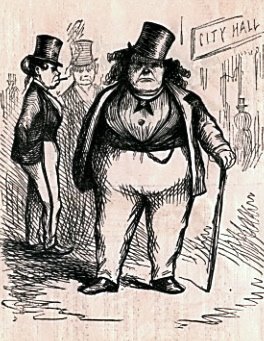
Professor H was a melancholy man of unusual proportions. Overdressed for spring in a gray, flannel suit and a felt hat, he was more melancholy than usual as he wandered beneath the trees looking for a patch of shade. Students congregated in groups across the courtyard. Some chattered in the sun like self-important parakeets. Others squinted industriously as sunlight slanted off the pages of their books. Professor H paused to examine the grass next to a tree root. Deciding it was not dry enough for his taste, he sighed and moved on, skirting the students cautiously, unwilling to intrude upon their repose. He had wandered into youth’s domain– the sun, the shade, and the picnics all reserved for men and women who tossed themselves fervently onto wet patches and anthills. Although uncomfortably aware that he was trespassing, he was eager to be close to innocence and ignorance of worldly concerns– like death.


As a professor of these same men and women, he was daily reminded of his own mortality, an inconvenience only somewhat relieved by the fact that their presence furnished him with a cozy, cluttered office. The pride of his academic life, the office was by no means large. Its diminutive size suited him just fine because the close quarters condensed his belongings, lending him the pleasing appearance of affluence. Books were crammed lengthwise, sideways, all ways into the bookcases. They clustered in heaps in the corner, in stacks under the window, and in trails along the walls.
The desk was buried beneath shifting dunes of lined paper. This beachy landscape was composed of his poetry, for which he was known as the Greatest Living Poet in the English Language. In no particular order, the poems spilled from drawers, across the telephone, and over a coffee mug that had been lost for two months.

Professor H never threw anything away. He kept every book and every copy of every manuscript he had ever written. He saved his students’ term papers as relics of their haunting naïveté. They were from a time when young people hunted a single word by lamplight through long, sleepless evenings. A time before their love of poetry was corrupted by the language of the real world: canned slogans, Internet jargon, and popular fiction.
College is a time of anxiety and innocent arrogance, he mused, stepping over sleeping bodies. On some, this age never draws to a close; they are caught forever in a glimmering society of self-importance. The belief that their occupations have significance is a force necessary to survival¬. Human life¬– such a fragile thing!– is secured by a delusion of grandeur. We must believe that the world might shatter around us if our pen slips or a word is committed out of place. We must believe we are important, or we might very well go mad.

Pondering the meaning of life, Professor H grew very sad. His shoulders stooped as lines of poetry pressed down upon him. Most distressing was his knowledge that his thoughts were unoriginal. Philosophers and poets far greater than him made their livings exploring the delusions and illusions of humanity, but they still held a certain fascination. How extraordinary, he thought, that we choose to ignore such a simple reality. We consciously thrust the knowledge of our own unimportance into the far reaches of our minds. Nevertheless, our innate knowledge of it drives our very existence with desperation, constantly reaffirmed by the fragility of mankind, and the inescapable devastation of time.

But these are not the things that students think about. Professor H frowned beneath the budding trees. Oh, to be young again, with life coursing through a body unhindered by grave thoughts. Heavy with philosophy, his domed brow lowered against the breeze. Professor H sighed as if his ancient heart would crack.

“Professor H, Sir!” A voice rang out across the courtyard and feet skidded on the gravel behind him. Professor H rushed towards the English building, his suit jacket growing tighter and warmer with every harried breath. This, of all days, was the one on which to avoid students. Graduation morning– when misty-eyed fledglings rushed at him from across the campus to pay their last regards, to profess their undying appreciation for his mentorship, to acquire his personal address for continued communication. They sought him as if it were his last afternoon on earth, and with each word of gratitude, accompanied by damp and mournful expressions, he died again and again, with each confrontation.

“Professor H,” the voice grew anxious. A student, come to pay his respects to a dying man. Wrapt in melancholia and warm flannel, Professor H was in no mood to be grieved over. He loosened his tie and quickened his pace, anticipating the cozy office and leather chair. Just as he reached the door, a body came hurtling between himself and his sanctuary.

“I’ve found you.” The body said, quite unnecessarily.

“So you have.” Professor H sighed. “Good afternoon, Mr. Castle.” The body now had a name: Christopher Castle. Defeated, Professor H turned down the lake path as Christopher Castle trotted beside him. Although curmudgeonly, Professor H was a kind man at heart, and proffered a gentle word to his pupil.

“Congratulations, Mr. Castle. Our acquaintance is coming to a close. What will you do now, with the rest of your life?” Christopher smiled down at his beloved professor. He stood tall, clear-eyed, handsome, and rosy with the flush of youth upon him.

“What do you mean?” Christopher laughed. “I’m not going anywhere.” Professor H was generally a patient man, but he had drowned himself so thoroughly in bitterness towards young people on this afternoon that even the slightest ridicule could not be endured. Irritation reddened his cheeks, as did tomatoes, spicy foods, wind, and exercise. He steadied his voice before replying.

“Please, don’t mock an old man.” He barked, and turned back towards the college. Christopher looked after Professor H in confusion. How had he offended his mentor? What had he said? In fact, he didn’t remember saying much more than ‘hello.’

“Professor,” he chased after the shambling figure, “I truly do not understand. I’m sorry to have upset you– I really am– but I don’t understand why you are angry.” Professor H looked Christopher up and down. He studied his student’s damp and woeful expression, and found it was sincere.

“Why are you wearing those robes?” he asked.

“These?” Christopher plucked at his black gown, and made a little hop. His robes twirled around him. “For the celebration.” He said. “I had a letter that I should be fitted for robes, so I did. Isn’t there a celebration today?” Professor H sighed. His students were often very strange and he had learned to take their peculiarities in stride. He had, after all, suffered four years of Thomas Quip, who refused to read books, and preferred to write his papers on what he thought the book should be about. Despite the miserable grades he received, Thomas Quip continued to take every one of Professor H’s courses, each semester for the entirety of his college career. “After all,” he had said, “It’s not about the grades; it’s about the literature.” Upon graduation day, Thomas Quip thanked Professor H for introducing him to so many great masterpieces.

“Prometheus Unbound was my favorite,” he said, “Those erotic scenes are simply astounding. My goodness, what an uplifting tale.” That day, Professor H admitted, as a graduation gift, that Thomas Quip’s version was far more interesting than Shelley’s.

But Christopher Castle was not as imaginative as Thomas, nor as irritating. He was mild and hardworking, and Professor H liked him better than many of his students, which is why he continued this odd conversation.

“Today is the graduation ceremony, Mr. Castle. That means you will be graduating from this university. You will be given your diploma and sent on your way, to make a life for yourself in the world.” Christopher grew pale as this knowledge invaded his simple world.

“Nobody ever told me,” he said, horrified, “That I would have to leave school.” His voice broke into a sob, “To leave the university! Oh, why would I even wish to do that? Oh, Professor, please excuse me– there must be some mistake.” Christopher fled down the lake path, his black robes flapping behind him like great, mournful wings. Professor H looked after him, shaking his head.

“Poor child.” He murmured. And for the first time in a long time, he was glad that old age held few surprises.


Eminent political author T.J. Emmet Jr. winked reassuringly at the students ranged before him in rows of black. He knew his speech well; it was the same one he had given at every graduation ceremony for fifteen years. He was amazed that no one had caught on yet. But then, he mourned, as he smiled out into the crowd of young men and women, no one much listens to graduation speakers, anyway. He was not even listening to himself. What could he say that was new and inspiring? He was a politician– he knew intimately the misery of the world and it was not his job to be uplifting. He was leaving for Africa the next morning, and would be giving the same speech to the African youth committee. He would change the words slightly, of course, substituting “Graduates of this fine university” to “Troubled youth of this rich desert land.” It had gone very well in Afghanistan.

Christopher Castle was not listening to the speech, either. He had somehow found himself swept along with crowds of other students, across the football field. Blinded by the hot stadium lights, he had struggled against the crowd, but was shoved inevitably forward, closer and closer to the stage, further and further from the life he knew. How had this happened? He stared up at T.J. Emmet Jr., trying in vain to make sense of his words. So it was true, he was leaving school. This was to be his final afternoon in academia. What was he to do now? His life stretched blankly before him. Christopher had read about Life, but it had always seemed to belong to someone else.

He had glimpsed his parents high up in the audience as the throng carried him along. Waving vigorously, his father peered down at him through a pair of binoculars. His mother, elegant in white, held a bunch of roses in her lap. Were they celebrating, or mourning? He was not sure. Christopher touched his decorative hat. He had thought it was a strange shape, and he still did not understand why it was square and flat. Perhaps these are the hats one wears beyond the school gates. The outside world suddenly seemed alien and frightening– a place where people wear robes and peculiar chapeaux.

Christopher Castle had never been one to dwell too long on misfortune. He dried his eyes and lifted his chin. If he must leave school, then he must. And he would succeed in life as he had succeeded at education. He sat up straighter and strained to understand the words of T.J. Emmet Jr.

The venerable speaker, at this very moment, also returned his attention to his speech as it came to a close. This was his favorite part, a rhetorical masterpiece, written originally for the Appalachian foot soldiers preparing for battle with mountain peasant tribes.

“Oh, harried peoples preparing bravely for death, remark to one another upon the quality of life for which you battle today. You may very well perish– be prepared. You may very well slaughter another man– be proud. You may lose an eye or a leg– do not grieve for them, for they are mere trivialities in the steady march of time. The world may not miss you, nor society mourn your passing, but that should not hinder your crusade.” He paused to measure his effect upon the crowd. Some students listened with true enthusiasm– these would go on to become our country’s politicians and economists. The rest of their faces betrayed confusion, desperation, or lines of sleep. Many of these would likely rise to power as janitors and telemarketers. T.J. Emmet Jr. hated telemarketers.

“Come to me, o’ heathens, and renounce your evil ways.” T.J. Emmet Jr. had once been occupied as a religious zealot; in his political career, he had been pleased to discover that some rhetoric was convenient for various and sundry occasions. He lowered his voice, noting which students leaned forward in their seats. These, he would approach later. “We must drive out the rebellious factions and crush them before their authority spreads. For the influence of petty men travels wide and deep and dangerous. O, sinners, beware.” He glared into the video monitors, and the local news station projected his terrible gaze throughout the airwaves.

“Our youths are armed and seek you out to where you hide, quivering in holes carved into the dirt. You cannot squat there long, for we shall hunt you, and with burning sticks, drive you forth into the light.” He turned back to the students and winked. “This is the day for which you were born. This is the day you choose life over death, and death over defeat. There can be no defeat for you, which leaves only victory, or death. What, then, is the point of your meager lives, if not to go out into the world and conquer it? Bend your foes beneath your foot, crack their ribs with gnashing teeth, and tear their flesh with sweeping fists. This is not a time for pity! If there be cowards among you, cast them out and tighten your ranks. There is no room here for the weak, the spineless, or the sympathetic. Launch yourselves into the mountains, men, and slaughter those who stand in your way, those who idle, those who resist, and those who fight back.” Shouts rose from the sea of black robes. Students stabbed the air with rolled parchments. They were ready– the young politicians, the economists, the budding managers– they heard T.J. Emmet Jr. and no one had ever made more sense. They pounded the earth with their feet.

Energized by the crowd, T.J. Emmet Jr. felt a rush of inspiration, and gave free reign to his rhetorical prowess. He suddenly found the very ending he had labored to devise through years of laborious speech-writing courses. It came out, unannounced, unbidden, unhindered.

“That said,” he paused, seeking silence, “death is not becoming to youth. It causes grotesqueries of the soul and mockeries of the spirit. Do not allow the travesties of life to mark your smooth brows with stains of blood. You are the victors, the conquerors, the future CEOs. Go, then, to battle. Go, then, into life with banners blazing and hearts warm with courage. If this is a battle to the death, this, then, is life!” he flung his head back, and his arms wide. The stomping students leapt from their seats, seething with bloodlust, crowding the stage, brandishing their diplomas before them. Those who remained behind, Christopher Castle among them, twiddled their thumbs and sighed.

Smiling, winking, waving, T.J. Emmet Jr. stepped off the podium as flat-board caps rained in clumsy arcs across the football field and two thousand voices rose in despair.


All was silent in the great hall. The curtains hung in heavy folds across the stage, and the chandeliers were dark. Light filtered through stain-glass, shifting from green to gold to red as various saints were touched by the sunlight. Christopher eased the doors closed behind him, and walked down the aisle for the last time, passing between the benches that had stood there since the school was built, so many decades before.

He knelt at the foot of the stage. High above him, at the top of the curtain, three bronze busts watched over the empty hall. The fathers of academia, Shakespeare gazed out from the center, Edison from the left, Benjamin Franklin from the right. For decades, they had serenely witnessed thousands of students cross the threshold out into the sunlit square, and close the doors behind them. Perched above the velvet curtain, the fathers never knew what happened to those who passed beyond their gates.

Christopher searched their faces for guidance, as so many had before him, but found only an unwavering serenity. Suddenly feeling foolish, he turned away and prepared himself for the leave-taking. The fathers watched in silence as yet another lost student crossed the hall, and opened the doors. Christopher brushed off his cap, and switched his tassel from one side of the mortarboard to the other. This, then, was Life!


He took a great breath, closed his eyes, and strode solemnly through the hallowed college gates and into the world, where he was promptly struck by a passing car. Here began Christopher’s advent into what T.J. Emmet Jr. solemnly called the “Real World.”

Labels:


Read more!

Tuesday, September 26, 2006

The Rocking Consumer Report

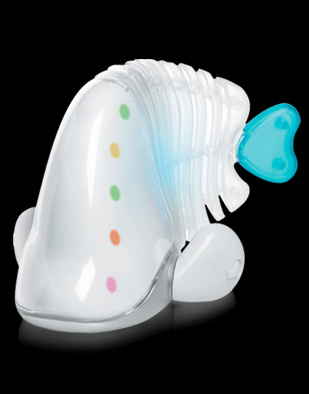
At one time or another, we’ve all been sitting at our desks, listening to some tunes, and wondered wistfully, “If a plastic, glowing fish were swimming in rhythm to this song, what would that look like?”

For just $49.95, you can find out!


Product: iFish™ Musical Pet
for iPod® & MP3
Price: $49.95
Materials: plastic, AAA batteries
Home: Sharper Image


Observe the dancing fish. This feisty, flashy, finned friend is in tune with all of your musical entertainment needs. This 8 1/2" long pet and friend plugs right into your iPod or MP3. He plays music, he dances, he’s generally nifty. Swimming along the lines of his predecessors, the 80s vintage dancing flower and the holiday singing reindeer, iFish is sure to be a hit with the young, hip generation.

You don’t need a pricey tank, a filteration system, food, or even water! This low-maintenance, technologically advanced pet is entertaining and decorative. His design follows sleek, aerodynamic contours in pure, unadulterated white. iFish seems to glow from within as he transmits your musical selections and wriggles with cadenced passion. His jointed tail swings to the music in lithe sweeps of sound. His fins flip to your own personal beat—they’ll stomp to JTim’s “Sexy Back,” swoop to U2’s crescendos, or whiz and whir to Outkast’s crunk. He’s up with all the latest music trends.

The iFish’s uses include: providing tranquil companionship to the easy-listening crowd, supplying your kids with the boundless delight of a fishy pet that won’t go belly-up, decorating any surface in a mod home, and teaching infants about aquatic life. What more does anyone need from a fish?

So do away with the dull, death-prone goldfish, and order your luminous musical iFish today!

Click HERE for more information about the iFish.

Labels:


Read more!

Thursday, August 31, 2006

Tuesday, August 29, 2006

The Rocking Consumer Report


Product: The Scrunchie
Price: 99¢
Materials: Fabric, elastic, style
Home: handmade-scrunchies.com


Observe the Scrunchie. This rad, custom-designed hair-elastic is all the rage in today’s swanky fashion world. It’s hip, it’s fresh, it’s stretchy. Just as the scrunchie can be stretched or crimped, double-wound or taut, so it adapts to the whims of fleeting generations. No one can say the scrunchie was left behind in the 80s.

Your scrunchie can be made to order in a variety of fabrics and prints. Have a ritzy holiday party to attend? Get dolled up with a “Hearts and Holly Mrs. Santa Hair Scrunchie” in rustic red with sweet white hearts and delicate green holly leaves. Handmade-scrunchies.com has a scrunchie for every holiday. From the “Happy Halloween Creepy Spider Hair Scrunchie” to the “Handmade Patriotic Pinwheels Hair Scrunchie,” every holiday is sure to be a blast with this festive finery.

And for those hassle-free nights out with the girls, a more whimsical look might suit your style. Hand-stitched cartoon character scrunchies are perfect for those laid-back occasions. Each scrunchie features your classic favorites; pump up your party with Clifford the Big Red Dog, Hello Kitty, Snoopy, or the cast of Cars. Handmade-scrunchies.com scrunchies also come in a variety of sports prints, seasonal themes, plaids, solids, and polka dots.

Uses include: restraining troublesome fly-aways while you plant tulips in the backyard, adorning your wrist at roller skating birthday parties, and breaking up your relationship with an overly sensitive author who insists that his main character would wear a scrunchie. It’s useful and fashionable. As the sales department states, “Your imagination is your only limit!” That’s right, the scrunchie can fill any lonely, outmoded chasm in your otherwise full and stimulating life. One satisfied customer raves, “I own at least 20 of their scrunchies & have never been disappointed.”

For just 99¢ you, too, can have style.

Click HERE to see the many luxury scrunchies available at homemade-scrunchies.com. Have too many scrunchies to keep track of? Keep them all in one place with this useful scrunchie holder.

Labels:


Read more!

Friday, August 25, 2006

The Rocking Consumer Report

Ever been stranded in the middle of nowhere and thought, “I could sure use a drink right about now.” Your fondest dreams are about to come true. JBB proudly presents: the inflatable pub.

Product: Portable Pub
Price: £4,379-£16,500, depending on model
Materials: Plasticized PVC polymer direct, anti fungal & flame retardant, aluminum, beer
Home: Amber Iris, Ltd.

Observe the inflatable Hogshead Pub. Ye “Olde Worlde,” CAD-designed, state-of-the-art, fully working pub can be yours for a modest price. This 40ft x 19ft x 22ft place of business and pleasure has room for a bar and holds up to 30 customers. Designed by Airquee Ltd (Air-key Lim-it-ed), the company that brought you bouncy castles and the world’s first inflatable church.

Your inflatable, portable pub can be erected on a level surface in just ten minutes with the help of two small blowers. Stand clear and watch your dream pub rise from the ground. It’s built in the traditional English style, with stone exterior, chimney pots, and a “pan tiled roof effect.” Inside, you’ll bump your head on the low, wooden ceiling. You’ll notice planked floors and stone walls hung with framed paintings of the English moors. You’ll warm your hands by the Inglenook brick fireplace at the back of the pub and admire the framed trout above the mantel. If the classical Hogshead style is not for you, the Inflatable Pub comes in three other charming models, the Barrel, the Kilderkin, and the “quaint and cozy” Firkin.

The inflatable pub’s uses include: providing a rubber-walled haven for the mentally deranged, furnishing a practical drinking establishment for poker enthusiasts, and supplying a lucrative business that folds up in your pocket. You can rent the inflatable pub for your next swanky event, or buy one to start your own business. Amber Iris, Ltd., offers guidance and training in food hygiene, entrepreneurship, and “beer dispensing.”

We are certain that your business venture will be a success with the Amber Irish Portable Pub. As the marketing team proclaims, “it’s just like relaxing in a real country pub!” except that everything is one-dimensional. Get yours today!

Click HERE for more information about the Portable Pub.

Labels:


Read more!

Thursday, August 24, 2006

Tuesday, August 15, 2006

Thursday, August 10, 2006

The Rocking Consumer Report

Feeling unclean lately? Let rubber ducky Jesus wash away your sins.


Product: Jesus Rubber Ducky
Price: $11.99
Materials: Rubber
Home: CelebriDucks


Behold rubber ducky Jesus. This soulful, hand-sculpted, collectible Jesus comes with his own baby lamb. He wears a holy expression. He can squeak at a perfect pitch, remain calm through turbulent seas, and float on water. If you’ve ever wanted to bathe with Jesus, here’s your chance. You can also bubble up with Moses and the Devil. For an alternative to Western religion, consider the roly-poly ducky Buddha.

Each duck is sold in his own gift container that includes a hang-tag for your personalized message. A technologically advanced weight-adjustment system allows your Jesus to soar perfectly upright over small waves and bubbles. The state-of-the-art squeaker is hermetically sealed off from the water so your Jesus’ squeaks won’t turn to gurgles. His collectible edition number is carved into his bottom.

His uses include: providing companionship to lonely bathers, uniting bath time and confession into one pleasurable experience, helping you scrub those hard-to-reach spots, and teaching infants about proper bathing rituals. He and his brethren have been featured in multiple media sources, including Maxim, the Tony Danza Show, the Discovery Channel, and Playboy. As the founder, president and owner of CelebriDucks says, “When good taste in fine bathing is desired, I hope you will think of our Celebriducks.”

Jesus is temporarily sold out.
But he’ll be back soon, and for just $11.99 you, too, can bathe with Jesus.

Get yours today!

Click HERE to see the whole collection of Celebriducks.

Labels:


Read more!

Tuesday, August 08, 2006

Thursday, August 03, 2006

The Rocking Consumer Report

Since JBB’s on a roll with electronic products (we’re surfing the computerized wave of the future!), we’re proud to bring you the latest wonder of consumerism. As we all know, we 20-somethings are approaching the time of life when our friends start having babies. And since many of us don’t have babies of our own, we’re stumped on what to get them on the blessed occasion. Well, JBB’s here to help. Just follow the lead of your trusty editors, who purchased this adorable product for JB’s own baby boy.


Product: Elmo Knows Your Name
Price: $39.99
Materials: fuzz, googly eyes, pompom nose, USB cable and CD Rom
Home: Toys R Us


Elmo proves that friends can be bought.

Observe Stalker Elmo. This plush, programmable, foot-long, interactive fellow has googly eyes and an orange pompom for a nose. He’ll remember baby’s every move. He’s cute, he’s fuzzy, he’s “Elmo Knows Your Name.” Giftwrap is available.

Your Elmo can be programmed to know your child’s name, birthday, likes and dislikes, and daily routine. He will also retain the names of baby’s relatives, friends, and pets. He knows more than 100 stories and games, which he will personalize just for baby. The computer programming part is easy as 1-2-3! Confusing directions are most likely included in the box.

His uses include: playing with baby so that parents don’t have to, keeping a googly eye on every aspect of baby’s life so that he’s never alone, and educating infants about computer programming. He’s also the friend every baby should have. As the sales department declares, “children feel that they are interacting with a ‘real’ live special friend.” All babies are beautiful, but let’s face it—some are less beautiful than others. It’s these unfortunate little souls who will benefit most from the friendship of a “real live” stalker Elmo. When no other children will play with your child, at least he will have his fuzzy friend to keep him company on the playground.

For $39.99, Elmo can know your name.

Get yours today!

Click HERE to see Elmo in action.

Labels:


Read more!

Tuesday, August 01, 2006

Thursday, July 27, 2006

The Rocking Consumer Report

Every so often, my trusty editors like to dip into the world of merchandising and show you what’s out there for post-collegiate, pre-professional, twenty-something shoppers in the 21st century. We don’t make any money by introducing these wares; nor, unfortunately, do we get free samples for writing about them. We simply feel obliged to share certain new rock-ass products with our readership.


Name: “Alive” Chimpanzee
Price: $149.95
Materials: fur, glue, rubber, paint
Home: The Sharper Image


Observe the robotic chimpanzee. This life-sized, fully animated, infrared, stereoscopic robotic bust is lovingly crafted to look exactly like a real chimp. His eyes follow your every movement. His mouth opens and closes in expressions of glee. He is a pet, a friend, and a fabulous centerpiece.

Your “Alive” Chimpanzee is programmed with four whole emotions, listed by the sales department as “Curious,” “Happy,” “Fearful,” and—best of all— “Feisty.” Designed to react “naturally” to his surroundings, your chimp will follow your every movement with his expressive, tender gaze. He will giggle when you tickle him under the chin, and nod his head while you talk. You may also deactivate his “natural” reactions, and manipulate his every response using a handy wireless controller.

His uses include: providing companionship to the elderly, dispelling awkward moments, and educating infants about mammals. He is a comforting presence in the nighttime. He is a friendly face on a dreary company outing. Perch him in the front window to scare away potential intruders, seat him beside you on the bus so you don’t get stuck next to a stranger, or take him for a walk to meet other chimp-lovers. He is also a great centerpiece for any dinner party or cocktail gathering. Guests will be awed by his lifelike appearance and his realistic jungle noises. Just think of the conversations that will ensue!

The “Alive” Chimpanzee can be yours for just $149.95. That’s a small price to pay for a lifetime of love.

Get yours today!

For more information and a must-see educational video, go HERE.

Labels:


Read more!

Wednesday, July 26, 2006

Taking a Mick

JBB would like to wish an enthusiastic, mulletted, thick-lipped, silk-shirted, pleated pants, fancy claps, jazz hands, leg kicks, ass shakes, dancing in the streets happy birthday to that most timeless of sixty-somethings, Sir Mr. Mick Jagger.

If the Rock Revolution were to have a video, this would be it.


Labels:


Read more!

Friday, May 19, 2006

Meet Croft & Oline


Croft ('krawpht) is a post-collegiate, pre-professional twenty-something editor, playwright, novelist, JBB-overlord, karate master working in her field and living in Chicago’s Old Town district. A graduate of Boston Univ. and the Univ. of Chicago, Croft is JBB’s resident expert on poultry dishes, the Sedar, James Joyce, The Last Unicorn, Gilbert, and girl-stuff. She enjoys public intellectualism, tea, and kitties.

Oline (Oh!-'Lighn) is a post-collegiate, pre-professional twenty-something editor, biographer, JBB-overlord, Jackie expert working in her field and living in Chicago's Lincoln Park district. A graduate of Mississippi State Univ. and the Univ. of Chicago, Oline is JBB's resident expert on movie mags, chocolate cupcakes, fashion, biographies, blogs, Anne, girl-stuff and animals of the feline persuasion. She enjoys 75-cent pretzels, H&M, and public intellectualism. She hates birds.

Labels: ,


Read more!

Wednesday, May 17, 2006

In Which Christopher Castle Loses a Job and Acquires an Overcoat in the Same Evening

By The Croft

An unattractive man by nature, Mr. Walpole was not improved by anger. In fact, his acquaintances often commented that although he was ordinarily ugly, anger transformed him into a creature of the most repulsive sort. And he was often angry, to the great dismay of his wife who, like most other wives, would have preferred a handsome husband.

When Mr. Walpole was enraged, his chest expanded to twice its size, his face grew mottled, and a vein throbbed dangerously in his forehead. His fingers thickened, his eyes bugged out, his lips turned purple, his toes curled, and his buttocks clenched. On occasions of particular wrath, his knees locked and his throat swelled, rendering him mute and immobile. Like so, he boiled in impotent anger until someone came near enough for him to punch, which always calmed him somewhat.

Next to his temper, fashion was Mr. Walpole’s most extraordinary feature. He cleverly deflected attention from his ill-formed figure with silk shirts and striped suits. His hats were tilted just right, never crushed or crumpled, and his cufflinks gleamed. He wore the finest of overcoats and dinner jackets and business suits. Swathed in rich fabrics, Mr. Walpole was an appalling combination of ugliness and beauty, like a turkey in peacock feathers.

Mr. Walpole was well known around town as an eccentric and a distinguished patron of the symphony. He was loathed by the presidents and directors of this fine institution, and feared by the lower echelon of customer service representatives–the box office agents, ushers, and bartenders. He had been a subscriber for a number of years, which meant that, to the great dismay of these officials and representatives, a specific seat was reserved for him in the audience every week. And it was a very good seat.

It so happened that this seat was on the center aisle in the third row of the right section. This was the best seat in the house for many reasons. It was close to the musicians, but not so close that Mr. Walpole was wetted by the spittle that shook free from the saxophones. The third row on the aisle was also nice because there was more legroom. Mr. Walpole’s legs were long and thick, and it was difficult for him to fold these appendages neatly within the bounds of a normal seat. He liked to stretch his legs out into the aisle, and cross his ankles in a dignified manner.

All of these were perfectly good reasons for Mr. Walpole to prefer the third row, center aisle. Above them all, however, was the fact that his seat was directly in front of the flute section. And in the flute section, directly in front of his seat, was a particular flute player with long, golden hair and soft eyes. And for all of its obvious advantages, Mr. Walpole’s seat had only one disadvantage: it was directly next to the seat of a certain Mrs. Walpole. His wife did not enjoy the symphony, but attended only to watch her husband watching the flute player. This unnerved him a little, which was the reason that Mrs. Walpole preferred her seat.

One night, in the middle of the season, the curtain rose to Mr. Walpole’s intense displeasure, and Mrs. Walpole’s joy. The flute section had been moved to the left side of the orchestra for some odd reason or another that only conductors understand. Mr. Walpole stood up and strode off down the aisle; Mrs. Walpole stretched out her legs and enjoyed the symphony for the first time.

Despite Mr. Walpole’s angry phone calls to the director and the president, the conductor, and the governor, the orchestra remained settled in this new position, and the officials stood their ground. The flute section would not be moved, just for him, they said. So Mr. Walpole changed his tactics. If they would not move the orchestra, he stated, they must move him. And with a sigh of relief, the officials wiped their hands of Mr. Walpole, and deposited him in the laps of the customer service representatives.

“Call the box office,” they said, and laughed to themselves. So Mr. Walpole called the box office and demanded his subscribed seat be moved. He knew the seat he wanted– the third row, center aisle on the left side.

“I’m sorry, Sir.” Said the young woman at the box office. “But that seat is subscribed.” It was, indeed, the seat of Mr. Marlin Archer, a gentle soul who had once played the saxophone in a blues band until he lost a hand to frostbite in a bird-watching expedition. He had attended every symphony performance for the last forty years– the first thirty-five of which he had attended with his wife, who loved Beethoven, until she passed away while hunting grouse in October. Everyone knows grouse hunting in the fall is a risky business. Now, alone, Mr. Archer continued to attend the symphony every week, in the very same seat. This seat had been passed on to him by his father, who had sat in the same spot for fifty years before him; it had originally been passed to Mr Archer’s father by his grandmother, who had sat there since the theater was built many, many years ago.

“That is not acceptable.” Said Mr. Walpole to the box office girl, when she explained the circumstances. “I am a subscriber, and I will have that seat.”

“I’m sorry, Sir, but you cannot have that seat.” Repeated the girl. She explained again, eternally patient as customer service representatives are wont to be. She offered him other seats, all very nice seats on the left side, all available. But to each, he replied,

“Is it the third row, center aisle, left side?”

“No, but it is the fourth row, three seats in from the center aisle.”

“Unacceptable.” There was no legroom there, you see.

“Fifth row, center aisle.”

“Too far away.”

“Second row, center aisle.”

“Too close.” By now, Mr. Walpole was shouting and the patient girl was crying. When she was no longer intelligible through her sobs, she was replaced by a fresh, patient voice.

“How may I help you, Sir?” The same conversation was repeated until the second patient voice was hoarse.

“Let me speak to your superior!” Mr. Walpole shouted at the third box office girl, who handed the telephone to the manager.
“How may I help you, Sir?” Asked the manager as he passed a box of tissues around the office. Mr. Walpole shouted his demands.

“That is simply impossible, Sir.” The manager said politely. After much explaining and repeating, Mr. Walpole threatened to remove his patronage from the symphony. Box office people and other people of little authority are much distressed by this sort of threat, for they imagine their great cultural institution crumbling into dust all because they angered an ill-tempered patron. Box office people are always the first to be blamed for such catastrophes.

The manager did not know what to do. He worried and pondered, and kept Mr. Walpole on hold for a very long time, which just made him angrier. And then, the manager had an idea.

“Hello, Sir? We have pulled some strings here and I’m happy to say you may have that seat.”

“It’s about time.” Mr. Walpole barked, and hung up. The manager ordered the first box office girl to make a phone call. He told her what to say and, at last free of the affair, laughed at his brilliance. Still sniffling, the box office girl sighed and dialed Mr. Archer’s number. When he answered, she forced her voice to sound cheerful.

“Hello, Mr. Archer? Congratulations! I’m calling to inform you that because of your long and magnificent patronage to the symphony, your seat has been upgraded to the second row.”

Christopher Castle was, at this time, employed by the symphony orchestra in the coat-check room. He stood behind a counter every evening and took people’s coats. He hung them up on numbered hangers and gave each patron a slip of paper printed with a matching number. For this task he received a modest salary, plus tips, if he was lucky. He had learned through experience that the placement of the tip jar had a lot to do with how full it would be by the end of the night. In his early days, the tip jar embarrassed him somewhat, and he tried to make it inconspicuous, yet to encourage tips by smiling and handling coats with a delicate touch. He had placed the jar off to the side, partially hidden behind a little framed sign that read “Don’t Forget Your Overcoat.” Since no one could forget their overcoat in December, no one read the sign; therefore, his tip jar went unnoticed.

When his first paycheck barely covered his rent, Christopher decided that pride and honor would have to be less conspicuous than the tip jar. He placed it in the center of the counter and stood behind it so that patrons had to hand their coats over the jar. He made a few tips this time, but noticed that those who dropped coins into the jar did so with a hunted, almost hostile glance up at him.

Intimidation seemed to work moderately well, but Christopher Castle was not entirely comfortable being intimidating He moved the jar a little to the right, and stood a little to the left. When people handed him their coats, they furtively dropped some change in the jar when Christopher swept their cloaks into the back room– except Mr. Clark from the first row, who took change out of the jar to use at poker night.

This was by far the most effective placement for a tip jar. Christopher shared his discovery with the girl who worked at the gift shop, the bartenders, and the cookie-seller, all of whom tried it to their immense satisfaction. Christopher became very popular at the symphony.

All in all, Christopher enjoyed his job. He was allowed to attend concerts for free on his off-nights. He sat high up in the balcony and closed his eyes, learning to appreciate the booming grandeur of Beethoven, the pips and squeaks of Bartok, and the fanciful stories of Stravinksy. Perched above the orchestra in the magnificent domed hall, he felt that even he, in his own small way, was supporting the musicians; helping to create the glorious music they produced, night after night.
Until one night when their music was gloriously interrupted. Mr. Walpole arrived triumphant at the symphony, his wife walking eagerly beside him. She was looking forward to the concert, for he had not told her about the new seat. Mrs. Walpole was much dismayed a short time later to discover that, while her husband had changed his seat, hers was very much in the same place.

Mr. Walpole carried in his arms a large package; so large, in fact, that he had difficulty getting it through the lobby doors, which made him angry. The bartenders sighed, the gift store girl took a deep breath, and the cookie person threw a napkin over the cookies, for Mr. Walpole always touched each one and never bought anything. Christopher Castle took out his finest coat hanger and straightened his tip cup. He never received a tip despite the extra care he took of Mr. Walpole’s coat, but he never stopped hoping for one.

People stood aside for Mr. Walpole as he passed, and looked after him as he carried his colossal box across the lobby. It slipped and tilted in his arms, pulling him off kilter and into ladies and gentlemen that leapt gingerly out of his path. In this awkward manner, Mr. Walpole made his way to the coat-check counter. He placed the box at his feet, and swept his overcoat from his shoulders. It was long and black and fine. The gold buttons shone and the collar stood stiff at attention. His cufflinks were anchors and the hem was clean. It was the coat of a duke. If it had been red, it would have been the coat of a king.

The coat rippled richly as he tossed it over the counter, into Christopher’s waiting arms. While Christopher hung the overcoat in the back room, Mr. Walpole took his box into his arms with much groaning and puffing. His frustration grew. He was angry with the saleswoman who had enclosed the gift in such an awkward box, forgetting that he had asked for the gift to be wrapped as grandly as possible, so as to be more impressive upon its presentation to the flutist later that evening.

As Mr. Walpole struggled with the package, patrons lined up behind him to check their coats. Men coughed meaningfully and ladies tapped their shoes. Mr. Walpole became angrier and angrier as important people grew increasingly frustrated at his struggle. Finally, he heaved a corner of the package onto the counter. Christopher disappeared behind it.

“Sir…” his voice piped from the other side of the package, “I don’t think it will fit.” Mr. Walpole growled dangerously.

“It damn well will.” He barked, and shoved the box with both hands. It creaked and wedged above the counter. From the other side of the package, Christopher suggested,

“Perhaps you might keep this in your car.”

“I certainly will not.” Mr. Walpole leaned against he package and shoved with his shoulder. “This is the coat-check and you are to stow my belongings. Now pull!” He shouted. The patrons in line muttered to themselves. The lady behind him fanned herself with a program and took off her mink coat, draping it over her arm. She tapped Mr. Walpole on the shoulder. Without turning, he shouted something extremely rude to the tapper.

“Well, goodness!” She huffed. Her husband handed her his glass of red wine and rolled up his shirtsleeves.

“Now see here…” The husband growled. Mr. Walpole stepped back with a determined grunt and the line stumbled behind him. With a roar, he threw himself forward and rammed the entire side of his hefty body against the package. With a tremendous crunch, the package jumped across the counter, into Christopher Castle’s chest, and knocked him flat. The counter caught Mr. Walpole in the stomach and sent him sprawling backwards just as the man with rolled shirtsleeves swung his fist. He missed, however, for Mr. Walpole scattered the patrons with flailing limbs, and knocked the wine glass from the lady’s hand. Red wine poured over her white mink coat. Amidst screeches and spills, Mr. Walpole picked himself up and planted both fists on the counter, his face turning a startling shade of purple, the vein above his eye pulsing, his knees locked, his throat swollen, he could only bark, “Argh! Argh!”

And to Christopher Castle, who looked up, startled, from the floor, Mr. Walpole was the Devil’s very likeness. Other angry faces rose up around Mr. Walpole. Weeping, the lady held up her ruined mink. For a full minute, no one spoke. They all watched Mr. Walpole’s mouth working soundlessly and his eyes twitching.

“You!” He shouted finally, pointing at Christopher, who struggled to stand up. “You pushed me.” The angry faces all turned to Christopher.

“You.” The lady moaned, “You ruined my mink.” The miserable scene that followed was not a highlight in Christopher Castle’s young life. The manager was summoned, apologies were skillfully executed, and coats were at last hung on their hangers. In his own heart, the manager could not blame Christopher Castle, for he had his own experience with Mr. Walpole’s foibles. He was wise enough to know, however, that it would be the end of the symphony if he blamed a patron for such a catastrophe, so he publicly berated Christopher and took away his tip jar. The manager promised the patrons that Christopher would never work at the symphony again– after this evening, of course, because they were short-staffed.

Humiliated, Christopher handed Mr. Walpole a numbered ticket. He snatched the slip of paper, grunted loudly, and, still purple, strode away followed by his wife, who never checked her coat, or indeed removed it at all. As the rest of the patrons filed into the theater, the manager winked at Christopher and promised him a good reference. Christopher found himself both disgraced and unemployed. He sat miserably on the stool behind the counter, and waited in agony for the end of the evening.

Christopher’s night was ruined, but the patrons settled calmly into their seats. No one had been injured, after all, the lady had another three minks at home, and Mr. Walpole had his new seat. There were only two unhappy concertgoers that night, and both of their eyes were on Mr. Walpole. Mrs. Walpole sat on the right side of the room, watching her husband smiling up at the flutist from the left. Mr. Archer huddled in his second row seat, gazing sadly back at the seat his family had warmed for generations.

From the coatroom, Christopher could hear the concert begin. He shuddered to think of how close he had come to single-handedly ruining the symphony. Instead, it had ruined him. No longer would he sit high up in the balcony under the great dome, for his musical education had ended here among the overcoats. Inside the hall, the trumpets sounded in mourning, the clarinets wailed, the French horns moaned; they all seemed to grieve for Christopher Castle. He leaned back, hugged by empty sleeves, and closed his eyes.

Many patrons prefer to close their eyes at the symphony– to block out distractions, they say. Mr. Walpole was not one of them. He enjoyed the music as much as the next person, but it was not Beethoven or Mozart who drew him back, week after week. The music had become mere background to his true pleasure– catching the furtive glances of the soft-eyed flutist. While others rested sightlessly beside him, Mr. Walpole hardly dared blink. He particularly enjoyed the pauses between overtures. In these few, silent moments, as the patrons rubbed their eyes and rustled and coughed, the flutist could devote to him the full attention of her magnificent gaze. He leaned forward as the first overture came to a close with a single high, unwavering note.

Mr. Walpole watched as the flutist smiled out into the audience. It was a coy and intimate smile– a smile he knew all too well. But she was not smiling at him. Mr. Walpole followed her flirtation to a young man sitting a few chairs down from him. The young man’s eyes were fastened on the little flutist and, as Mr. Walpole watched, he blew her a kiss. She giggled and began to play, her eyes still caressing the young man, who gazed back at her. Mr. Walpole scowled from one to the other, as his wife glowered from across the room, and Mr. Archer shot him moist glances from the second row.

Only Mrs. Walpole and Mr. Archer noticed that something strange was happening to Mr. Walpole in the center aisle, left section seat. His face turned pink, then red, and then purple. A very deep purple. His eyes grew large and seemed to stand out from his head; the vein crawled in his forehead, his knees locked. Mr. Walpole’s thick fingers gripped the arms of his seat until his knuckles turned white. His mouth began opening and closing furiously. Mrs. Walpole half stood, then sat, then stood. The flutist smiled and lowered her flute. She mouthed something very naughty to the young man down the row. Mr. Walpole’s chest expanded horribly and his mouth opened wide, and did not close.

Mrs. Walpole opened her thin little mouth and produced the loudest noise she had ever made. At that moment, the cymbals clashed and the second overture came to a screeching halt among stray trumpet blasts and cacophonous high notes. The ushers flocked down the aisle, coat tails flapping behind them, and struggled to lift Mr. Walpole from his subscribed seat. Even in his unconscious state, he gripped the arms of his seat and clung to them with the bitter grasp of death. The ushers labored in vain to pry his fingers from the velvet and were forced finally to wrench him, seat and all, from the aisle. Held aloft in his velvet chair, head lolling from side to side, heart fluttering ever more faintly, Mr. Walpole was borne down the aisle and out into the lobby.

Mrs. Walpole scampered beneath her husband, catching the change that spilled from his pockets, clasping the hat that jumped from his head, dabbing her eyes with the handkerchief that had floated from his shirtsleeve. Mr. Walpole was swept past the lobby attendants, past Christopher Castle who sat in the coatroom and watched the whole thing from between silk coats, and through the doors to the waiting ambulance. In the silent, stunned hall, the orchestra took up where they left off, and the patrons settled back and closed their eyes against any further distraction.

The ushers, the bartenders, the gift store girl, and Christopher convened in the corner, chattering excitedly. Nothing this wonderful had happened since the choking incident of 1953, in which Mrs. Carmel had chocked on a beer nut in the lobby and been administered the Heimlich by the visiting Irish step dancer. The thrilled group fell silent when the lobby door opened some time later and Mrs. Walpole appeared, shrunken and wet from the rain. She hesitated a moment by the door and the attendants hurried back to their posts. Her eyes swept over the bar, the gift shop, and the cookie girl, and finally came to rest on the coat-check. Christopher straightened his uniform. Mrs. Walpole shuffled to the counter and produced a slip of paper with a number on it.

“The package, please.” She whispered. Christopher hauled the unwieldy, crumpled box onto the counter and Mrs. Walpole sighed. She heaved it up and clasped it to her chest. Pink tissue paper poked out from one corner. Tilting precariously from side to side, she started for the door. Christopher cleared this throat.

“Ma-am,” he said, “there’s an overcoat.”

“Oh.” Mrs. Walpole turned, “He won’t be needing that anymore.” And she smiled.

And that is how Christopher Castle lost a job and acquired an overcoat in the same evening.

Labels:


Read more!