Monday, February 12, 2007

Macintosh

By Bernanation, The Verisificator

The man in the brown macintosh loves a lady who is dead
Reanimated for the resurrection
let the red flow
in tear tracks down your tan and tired cheeks.

The man in the brown macintosh loves a lady who is dead
whose nerve endings flair when he is near
and animate the limbs
rising from rest to roam reality.

The man in the brown macintosh loves a lady who is dead
her eyes never close on the sunset
and her lids never open for the rise
that he gets out of hurting her.

The man in the brown macintosh loves a lady who is dead
tells her he loves her and melts away
leaves her supine and surprised in the melted clay
buried dead in foreign soil.

The man in the macintosh loves a lady who is dead
takes away her bell cord
cause she ain’t a dead ringer
for the easy fools he’s killed before.

Labels:


Read more!

Monday, January 29, 2007

The Versificator

My trusty editors and I are thrilled to announce the triumphant return of Jack Black's Body's Official Versificator-In-Residence, Bernanation. You may have seen her scurrying about the corridors of JBB World HQ and heard us whispering in awe, "There goes our Laureate of Rhyme!" Now she's back, with a spate of brand-spanking-new verses that we'll be bringing to you on an entirely irregular basis. Because this Revolution's got rhymes!

Wake

O! Tell me not in mournful numbers.
Life is not your empty dream,
because we all slumber in the sleep of one great dreamer,
always on the verge of wakefulness,
ready for his wake,
face blue and cold and wet with week old tears.

In the wake of the storm I am left,
clutching the air near a phantom limb.
Hold hold hold hold, but soft...

I sat in the window and watched the night break,
and leak moon all over the sidewalk,
walk walk walk,
all I want to do,
to give the holy man five more dollars,
hoping for karma to pay me back.

Labels:


Read more!

Thursday, October 12, 2006

A Good Interview Is Hard To Find


Bernanation's Steps To Journalistic Bliss

So you think you want to be a journalist. You can just see yourself mingling with celebs and writing for money. Sipping champagne backstage with Tenacious D, sharing croissants with Julia Roberts, sitting in on JTim’s GQ photo shoot… Well, it turns out that journalistic bliss isn’t all fun and frippery. It’s actually a hell of a lot of hard work. It takes guts and tenacity and a good interview. Flannery O’Conner said a good man is hard to find. I contend that a good interview is even harder.

We’ve all read those magazine articles that make you wonder if the interviewer has ever heard of his subject, much less researched him. Some journalists ask inane questions like, “What’s your favorite color?” and the person being questioned responds with “Black,” and you wind up with a dull and drool-inducing piece of dribble. Wondering how to avoid stimulating the overactive salivary glands of the literate population? I can offer a bit of insight to the process via my own first experience in the realm of the tête à tête.

I recently had the platinum opportunity to interview Honus Honus (AKA Ryan Kattner, the frontman of Man Man. How did I, a lowly JBB intern, get such a wonderful, stellar, top-shelf chance, you may ask. Well, I’ll tell you, and string you a few pearls of journalistic wisdom in the process. Behold, the Steps to Journalistic Bliss:

Step Number One To Journalistic Bliss: Never assume that someone is “too important” to talk to you. Believe me, I’ve contacted my share of duds—ie people who didn’t respond to my pleas—but not everyone will shoot you down. After seeing Man Man rock out in concert at Pitchfork, I had an idea. Expecting nothing, I threw the band an e–mail asking for a sit-down. That same day, Kattner emailed me back, “Why the hell not?” Lesson learned: It never hurts to try (unless you’re trying base jumping, which could potentially lead to a neck brace).

Step Number Two To Journalistic Bliss: Research the hell out of your subject. Yes, this step requires work. If you shy away from said work, perhaps this profession, or at the very least this particular subject, is not for you. Read other interviews, find out what questions have been asked ad nausem. For example, I steered clear of asking Kattner anything about his moustache—it had been done and done and done to death. If you are interviewing musicians, LEARN THE WORDS TO THEIR SONGS. They’ll be surprised, amused, and they will appreciate it. And it will be easier to reference their music if you know what it’s all about.

In addition, research pictures of the artists. Know what they look like. Kattner told me that he’d be the one at the concert with a moustache. If I hadn’t scoured pictures of the Man Man tribe I would have been lost in a sea of furry men; like true hipster lemmings everyone there had a moustache. Know your subject like you’d know a hypothetical enemy so as to stalk and capture their story.

Step Number Three To Journalistic Bliss: Be brave; be very, very brave. This is difficult for everyone. I was positively quaking in my Frye boots as I followed Honus Honus up to the green room, a shady attic filled with hairy musicians and hard alcohol. When I first stepped backstage, I stood rather awkwardly, awkwardly declined a beer, and awkwardly introduced myself (for no particular reason) to members of the opening bands. Still, when we sat down to the interview I bolstered my courage and asked the questions I came to ask. Honus2 turned out to be a nice guy—very willing to talk about everything from girls to rabid mothers at Christmastime. No great interview was ever gained by the meek.

So get out your tape recorders and sharpen your pencils. Grit your teeth and screw your courage to the sticking place. Do your research, send out your emails and faxes and phone calls, and get ready to join me in the glow of journalistic bliss.

You can read Brenna Ehrlich’s interview with Ryan Kattner in October’s issue of The Real Chicago, available in various locations around the city, and online at: The Real Chicago.

Labels:


Read more!

Tuesday, September 05, 2006

The Versificator Takes Her Throne

My trusty editors and I are thrilled to announce that, following a grueling admissions process and a full round of innoculations, Bernanation has been accepted as the innaugural Jack Black's Body's Official Versificator. During her tenure as Versificator-in-Residence at JBB World HQ and in her position as the reigning Rhyming Laureate, Bernanation will be wowing you with her versification skills on an entirely irregular basis. Enjoy, folks!


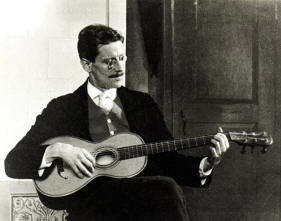
Plagiarizing Joyce
Bernanation


On his wise shoulders
through the checkerwork of leaves
the sun flung spangles,
dancing coins,
current
currency of the noon sun
paying its way to get through the day.

And he knew
and he saw
the light on the asphalt
and the air laced with faraway fires and damp leaves
an equinox murder
an end of heat daze
and a slow-down wake-up in the debris of calendar leaves.

Shedding the seven year suit of solemn and sad somber silence
ending the aeon-long episode of eternal eyeless ease
needing the nocturnes in blue and green
digging digits into damp debris
making a patchwork garden in the collected carbon of burned calendar leaves,
easy trails of light, paralyzed in the heat.

Days of bearing weight on wise shoulders
and contemplating a king on a checkerboard of seasons
Yes, give him some moon-spun bangles
Sing him broken harmonies to get him through the day.

Labels:


Read more!

Tuesday, August 22, 2006

The Creeps in the Shadows


Bernanation Muses on Lessons Learned from
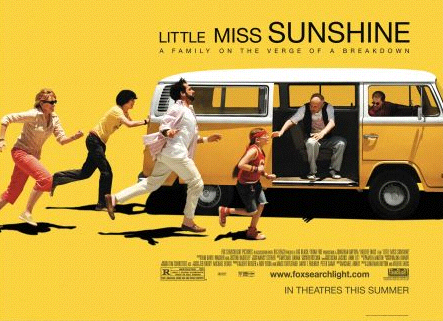
Little Miss Sunshine and Humbert Humbert


While Little Miss Sunshine has received a healthy heaping of praise from movie buffs across the country for its wit, charm, and surprising humor, little has been said about the film's darker undertones. As the JonBenet Ramsey case rises with the rest of the sleaze to the top of the tabloids, and lawyers scramble to represent the gender-confused John Mark Karr, I can't quite suppress the chill in my bones, regardless of the sunshine.

The film follows a kooky family’s road trip across country so the youngest daughter, seven-year-old Olive, can compete in the Little Miss Sunshine Pageant. On the day of the big pageant, the family sits uncomfortably in an audience of plasticine women. Olive's father notices a lone man decked out like a Hell's Angel sitting among the sea of pastel. He leans over, "Are you a father?" he asks. The leather-jacketed Goliath snorts and responds, "This your first pageant?" and pops in his ear plugs. While this moment caused me to laugh, I ended up choking on my mirth.

The film clearly identifies the pervert among the crooning mums, but it's not as easy to put your finger on the sicko in real life (not that you'd want to literally put your finger anywhere near a sicko). I mean, look at Karr: he was a schoolteacher; a nice looking man who was hunted down in Thailand and transported to America in business class whilst feasting on king prawns. No, the Humbert Humbert is not always the sleazy looking fellow dressed in leather; hell, the openly sleazy guys are usually more like Olive's grandfather, who'd rather be purusing porno magazines at the gas station than secretly lusting after the Olsen twins. Porn in and of itself is not illegal, but pedophilia is a different story. And the scary thing is, the guy with the kiddie porn on his harddrive could be the one teaching your kids their ABCs.

"Little Miss Sunshine" takes a close look at sexuality in American culture, and just how supremely warped our conception of it is. Some Americans think it’s perfectly acceptable to dress young girls in midriff-baring bikinis and lacquer their faces with make-up. They get to their feet and cheer when "tweens" croon suggestive pop songs and gyrate with batons. Because sexuality is only hinted at, Americans sit back in comfort; they don't have to stare sex in the eye, so it doesn't exist. (Now, I'm going to give away the ending of the film, so anyone who loathes spoilers should move on to Croftie's cartoon or something.) Still, if you put on "Super Freak" and "take it all off!" like Olive does for her talent, ho boy! America will slap you with a big old "censored" sign. It doesn't matter that Olive's moves are clumsy and childish, nor that she's still wearing more clothing than all the other girls combined, sex is expressed outright and that's WRONG. Let's all bask in the hypocrisy of our culture for a minute. America loves a good tan.

Little Miss Sunshine is a great film; it tells us to accept our families as they are, regardless of their eccentricities or shortcomings, and it reveals the truly revolting nature of the beauty pageant. Yet, while the film implicates the moms and pops who mold their daughters into mini sexpots, it falls short of dispelling certain stereotypes, namely, that those who look respectable are not always so genteel. The bad guys don't always wear leather and chains and tool around on bikes. No, if we've learned nothing from Lolita, Gentle Hum prefers first class.

Labels:


Read more!

Tuesday, June 06, 2006

House Keeping

In Which Bernanation Presents a Piece of Original Fiction

Louise had married Thomas Klein partly out of spite. Mother had raised her a good Catholic girl, had taught her all the things good Catholic girls know. Louise had gone to confession each week and whispered through the screen as the faceless priest nodded and nodded over his steepled fingers. She hadn’t had to go every week when Father was alive; Father had planned trips and outings on Sundays and Mother had silently complied, her eyes flashing and her mouth tightening as she nodded and packed.

But after the foggy Sunday in September when Louise had seen Father’s coffin, lacquered with red and orange leaves, lowered into the earth, she’d been forced to empty her mind in that little cage each week. Mother always said that Louise’s mind was full of cobwebs, and that nasty thoughts were libel to be caught in these webs. Louise didn’t exactly know what thoughts Mother meant, but she supposed that they had something to do with her male classmates, since they were never allowed over after school and if Mother caught her talking to them she was shuttled straight off to confession. Mother had tried to sweep away the cobwebs, but Louise didn’t quite want to give them up; she thought that without them her head would be empty and that the wind would blow through her ears and she’d be as cold as she was when Father died.
Needless to say, Louise was expected to marry a good Catholic boy. Mother had one all lined up: he had bright blond hair and bright blue eyes and wore crisp white polo shirts and kissed one on the cheek with cold lips. But Louise had someone else tangled in the cobwebs of her mind. Thomas was dark-haired and olive-skinned and went to Temple on Fridays. He kissed one clumsily in dorm rooms, but he kissed on the mouth. Mother hated him. Marrying him was the bravest thing that Louise ever did.

Now she was older, ensconced in her living room at number 56 Orchard Street, waiting. Thomas had been in the kitchen a long time, and he must have been whispering into the phone because Louise couldn’t make out a word he was saying. She could hear the person on the other line, though. The little Jezebel’s voice was a dull low whine rising and falling in volume, most likely interrupting Thomas’ nervous stutter. Louise shifted on her straight-backed Windsor chair, the one she’d had Thomas buy to go with the country theme of the sitting room. Out the window she could see the sun flooding the street and illuminating the tops of the red and orange trees. Louise heard a cough from the kitchen, and looked up to see Thomas shuffling into the sitting room, rubbing the top of his head and holding the phone limply at his side. He just stood there, rubbing his head and staring at the carpet.

Louise cleared her throat. Still, Thomas merely rubbed and rubbed his balding pate and sighed. She wanted to grab the cordless from his bony hand and fling it right into that God-awful painting of the bass he had just had to have. Instead, she adjusted the rose pin on her starched lapel, waiting for him to speak. Since no explanation seemed forthcoming, unless you count his uneven wheezing, the resultt of a deviated septum, she cleared her throat.

“Well, that’s all over and done with now.”

Thomas lurched down into the leather armchair, not even seeming to notice the embarrassing rubbing noise of his chinos against the seat.

“Thomas, I know you needed to let off steam. I understand that. Some men buy cars, some men quit their jobs and take up painting or some other form of bohemian pastime. Why, Kathleen Leonard’s husband, Charles, you know, from the historical society? He went off to Australia, or was it Africa... No, he went off to Asia to build houses. Anyway, I know, from the bottom of my heart, that mousy little Gina Feldman was merely... how shall I say it... a diversion.”

He was staring at his shoes. He was just staring at those hideous penny loafers, the pair with only one penny. Louise felt her lungs constrict and her lips tighten. When Thomas was in one of his unresponsive moods it took literally hours to extract any information from his flaccid lips. Louise did not care to wait minutes, let alone hours. Her voice rose to a pitch that, unfortunately, the neighbors could hear.

“For God’s sake Thomas! What? What, did she cry? Is that it? Did little Miss ‘I don’t wear a bra to distract people from my horsey face’ cry? Because, damn it all Thomas, what else were you expecting?”

“No,” he said, fixing his dishwater eyes on that ridiculous fish, twisted mid-leap and grinning grotesquely at the hook protruding from its lip, “...because I didn’t break it off.” Louise could only stare at him unblinkingly.

“What in the name of Pete do you mean Thomas? You didn’t break it off? What are you waiting for? I said to end it. I can understand the need to... the urge to...” She gave a little cough, “But Thomas I told you to end it, and I’d rather you do it sooner rather than later.”

“No,” Thomas said, sitting up in his chair and bringing his milky blue eyes up to meet hers in a brief show of bravery, “No Louise. No Louise, I didn’t break it off. In fact Louise, I would like a divorce.” Thomas gave a proud little smile, apparently pleased with his aplomb. He looked like a garden gnome: glasses slightly askew, ears red with constant embarrassment.

“No Thomas,” Louise said slowly, “You do not want a divorce. ” She placed her hand on his knee, knowing full well that now he’d want to be indelicate. He always got so excited by the slightest touch. She looked at his lips, sagging and pink, and her stomach turned.

“No,” Thomas said, lifting her hand from his knee. She looked at him aghast. The man was refusing indelicacy? Was he sick?

“No Louise. I... I love Gina. I’m not breaking things off with her. I want a divorce.” Thomas pounded his knee weakly after each word in this last sentence like some sad parody of a 1950’s sitcom father. Louise felt the saliva in her throat turn sour, burning her esophagus, and her lips began to tremble. She adjusted her pin even though it was straight.

“You can’t do this Thomas. After fifteen years. Fifteen years I have wasted leading you around by the hand. Fifteen years I have spent washing your dishes and cooking your ridiculous food! And now, now you have the nerve to tell me that you want to leave me, me who has sacrificed so much, for that little saggy Jezebel! Now Thomas, you cannot do this.”

“But Louise,” Thomas stammered and rose to his feet, “I love her.”

“Love her! You love her! Well isn’t that just grand! You love her, so that makes it alright to ruin my reputation, to take away everything. Oh God...” Louise put her hand to her heart and grabbed the arm of her little Windsor chair. “Oh God... I’ll have nothing... You little money-grubbing… with your ‘just in case, but we’ll never use it’ pre-nup! This is my home! I spent fifteen years decorating. I picked out that pineapple wallpaper!” Her knuckles were white on the arms of the chair and her hands were stiff as a corpse’s. Thomas was inching towards the door.

“Louise, I’m sorry, really I am. I’ll help you out. You won’t be homeless. You can stay here a while, until...” He paused and cleared his throat. He was half inside, half outside now. “I’m going to stay at Gina’s for a while, until, well, until it’s been made official. If you need anything you can call me.” He stood blinking on the stoop, his hand resting on the doorknob, the sun catching the shine on his balding head.

“Frankly Louise, I thought you would have seen this coming... I mean, you never loved me Louise. You know you didn’t.” Thomas sighed weakly, his thin chest deflating under his flannel shirt, and pulled the door closed behind him.

Louise felt as if Mother had finally rid her mind of those pesky cobwebs, or rather as if Mother had done so long ago and she had merely not noticed. She had never loved him, Louise realized. She’d said she loved him, she’d lain beside him each night and watched his sunken, hairy chest rise and fall until the Valium put her under, but she didn’t love him. In fact, Louise found that she couldn’t exactly say she had ever loved anyone.

She had loved the look on Mother’s face when she’d told the old witch that she was marrying a man named Klein. Mother’s mouth had collapsed into her chin and her pupils had dilated so much that they had looked black. She had looked like a melted doll. Remembered now in the chill of the October afternoon, that moment still caused a fire of triumph to pulse in Louise’s chest. Still, what was that moment worth? It was merely a memory of something that had been snuffed out. Louise found herself standing in the middle of a room built on years of make-believe. She’d always loved those model rooms at the hardware store, and had always harbored a desire to live in one. Now, she looked around her home expecting to see the living room end abruptly next to the paint aisle.

Still, the den looked the way it always did. There were the books that lined the walls, their spines still unbroken, their pages barely looked at. There were the ashes of Thomas’ father on the mantle, the remains of a man who always smelled like leather and old newspapers, but had been nothing to Louise. The picture frames on the mantle housed strangers. Her own face studied her from above the fireplace, smiling and posing in bathing suits and gardening hats. Her eyes in the photographs looked black and cunning.

The phone shrieked suddenly, and Louise found herself standing next to it, hand poised on the receiver, ready to wait three rings and answer with a bright, “Klein residence?” Cautiously, she took her hand away from the blue plastic. The ringer shrieked and shrieked until the answering machine interrupted with a curt “click,” and the voice of Mrs. Covington from the Garden Club boomed from the speaker. She crooned and cooed sympathy and lamentations, relishing each reiteration of “philanderer” and “little so-and-so.” She spoke as if she were reading off of a script. When the machine clicked off, Louise sighed and headed toward the couch.

Before she had reached the coffee table though, the phone cried out again. They all knew. Louise could hear the blood thudding in her ears, and she looked down at her hands twisting before her like foreign snakes. They were alien hands, useless hands, idle hands. Shaking her head slightly and untangling her fingers, Louise got out the vacuum. It started with a sharp growl, and set about devouring stray hairs, cigarette ash, and cracker crumbs from the thick shag. The cord tugged taunt at the wall socket as Louise vacuumed towards the hall to the bedroom. She played this game of tug-of-war until the plug ripped from the wall and the mastication of the vacuum sputtered into silence.

Just hours before, she had hospital-cornered the sheets, and pulled the flowered duvet halfway up the bed. Now she stared into the mirror above the dresser, which showed a slightly disheveled woman in a starched blue shirt with deep marionette lines cut into the sides of her mouth. Louise gazed at the hard mouth, curved upwards at the edges in wry mockery. Studying this apparition, she felt very cold, and very on edge. Louise did not enjoy feeling on edge. She did not relish agitation. Her therapist had told her to count to ten when she felt panicked, to take a walk. Louise decided that she would take a walk: a short one, to the medicine cabinet.

Turning so sharply that her heel tore up a chunk of shag carpet, Louise marched towards the bathroom. Opening the medicine cabinet she ripped out the bottle of Valium and popped off the lid as the phone shrieked again from the living room. The bottom of bottle was lined with only a few wisps of cotton. The drugstore stood at the end of Orchard and the beginning of Maple, the first of a short procession of shops that comprised the business district.

Louise peered down the deserted road at the line of pastel houses, all painted a dusty blue by the twilight. The row of long-slung townhouses resembled the model city in town hall: plastic and somewhat off-scale. The blue glow of television sets bled into the half-night that hovered outside. Louise breathed in the thin fall air laced with flame. She could smell wood smoke; someone had a fire going a couple of streets down. The last time she’d had a fire was Christmas over fifteen years ago. It was at Mother’s house and Louise was home from college. Thomas had called and her mother had answered. There’d been a fight after that. Louise had thrown the wooden Gabriel ornament that Mother had given her into the fire, and Mother had kneeled before the hearth crying as the flames licked around Gabriel’s head and blackened his praying hands.

Louise found herself standing in front of the drugstore and looked back at her neighborhood. It occurred to her that this was the first time that she had looked at Orchard Street since Thomas had said what he said. Somehow that seemed very important. She’d walked this street every day, seen these pastel houses every day, and each day melted together into only a vague watercolor of a life. But today was different; she would remember everything about today as it related to what Thomas had said. Everything would forever bear a taint, like a scar that, try as you might to cover with make-up, always resurfaces.

She pushed open the glass door and the bell rang. The man at the counter didn’t look up; he just sat on his high stool licking his lips over a dirty magazine. His feet were resting on a stack of newspapers, all folded incorrectly, and his hands were black with newsprint. Louise wandered towards the pharmacy in the back. The aisles were empty. She thought dimly that this was the first time she had entered the store since Thomas had said what he’d said. She didn’t recall the first time she’d been in this particular store; nothing memorable had happened that day, she supposed. But now, from now on, every time she would enter the drugstore she would remember what Thomas had said. She’d remember that man with the curly black hair behind the counter, trailing his thin fingers over his magazine, and he would become part of this day. She would remember what she bought. When she went home and entered her front door it would be the first time that she’d done so after Thomas had said what he’d said. It wouldn’t be the same. There’d be no way to tell exactly what had altered— the Windsor chair would still be there, the pictures in their frames, the shag carpet—but something would have changed.

Louise stopped halfway to the pharmacy counter and glanced back at the man, his black hands clasped in reverence over whichever pinup was currently spread-eagled on the page. His features were fine, like an icon’s, and Louise thought briefly of Gabriel and his crown of flames. Without giving the man another glance, she picked up a gallon of gasoline and a box of kitchen matches. The man rang her up without looking up from the ink-smeared woman he was tracing with his bony fingers.

Outside, the neighborhood was submerged in darkness, the Easter colors of the houses drained of their daytime glory. The streetlights cast writhing shadows onto the pavement, and Louise could see more and more rooms fill with golden light as she strode towards home. The houses were beasts, thriving and subsisting off of electricity and blue television static. Louise didn’t see a single human shadow in any of the homes; the beasts were silent, crouching in the slick nighttime landscape, hunched and glowing.

She stopped in front of number 56. It was the only dark spot on the whole block; if she hadn’t known it was there she would have thought that it had disappeared. But when she took a few tentative steps into the gloom she found, with a disappointed sigh, that it still stood. If she went through that door she knew that it would all be over. The house would swallow her whole. The pictures in the frames would mutter at night, keeping her awake, and every smell, every sound, every change in wind and season would remind her that she had only lived a watercolor life.

She put the drugstore bag down on her stoop and took out the gallon of gasoline. Twisting off the cap, she coughed at the acrid fumes, which replaced the autumn smell of woodsmoke and dried leaves. Slowly, she walked around the perimeter of her house, drizzling gasoline onto the pastel pink siding. She walked with an air of ceremony, with slow, measured steps, head bowed and face somber, until she came once again to the front stoop.

She thought of similar walks: placing one foot in front of the other in a straight line behind her father’s coffin, taking slow, halting steps dressed in cream white down an half-empty aisle. She took one last look at her front door before striking the match. Fire fizzled at the head of the match, and black spread down the pale wood towards her fingers. She stepped back onto the black sea of asphalt and tossed the match towards the front door.

56 Orchard Street exploded.

Glass shattered and showered the streets, roof tiles fell flaming into the autumn trees, setting the lawn and manicured bushes on fire. Smoke billowed into the sky and hovered there like a mass of phantoms. The windows were ablaze with golden light, all the other houses glowing tentatively next to its fire-licked jaws. The photos on the mantle warped and wrinkled, and the smiling faces in garden hats and bathing suits turned into black masks. The bass writhed in agony in a lake of fire. The floor erupted and carpeted the living room in red. The little Windsor chair crumbled into ash. The house shuddered and roared, collapsing onto its haunches.

All over the neighborhood men in half-tied bathrobes and women in faded nightgowns emerged from their pastel homes and stood on their stoops, the heat from what had once been number 56 Orchard Street rippling over their half-naked chests. Louise stood in the middle of the asphalt sea, gazing up at the blaze, her hands clasped limply before her as sirens sputtered and shrieked in the distance. Her face glowed red and her eyes stung, but still she stared into the inferno, transfixed and smiling. The cobwebs shuddered in the backdraft and burst into flame.

Labels:


Read more!

Tuesday, May 02, 2006

Meet Bernanation

Bernanation (Burn·a'nA-sh&n) is a collegiate, pre-pre-professional, barely twenty-something actress, writer, film snob, and Samurai sword collector studying an entirely useful combination of theater/English/film at Northwestern University. Bern is JBB's honored intern (really a feature writer, but JB relishes the idea of having an intern) who enjoys Holden Caulfield, salads, concerts, and finding really ugly clothes that magically look good on her.

Labels:


Read more!

Don't Stop Thinking About Tomorrow


The Berninator on Why College Ain’t that Great
Question:
How many times recently have I heard this oh so pitiful lament from the lips of today’s Lost Generation (a.k.a. the post-collegiate pre-professional masses o’ humanity): “Waaaa! I miss college!”

Answer:
Wait… let me get my abacus out. I haven’t done long multiplication in three years.

I know college was grand, the best years of your life, a four-year-long orgy of sex, drugs, and whiny emo rock, but come on! You’re recalling your past like a family vacation: remembering the joy, the fun, the seasons in the sun... and somehow managing to block how Mom got a migraine, Dad yelled at everyone to shut up, and Junior spilled lemonade all over the front of your white shorts (yes, white shorts, it was the 80’s. You blocked that too, huh?).

Well, as a twenty-something currently ensnared by college’s coddling clutches, I am here to remind you of all the things that made you call Mommy every day just to hear her voice. Here they are: the top ten parts of college life that make your post-collegiate pre-professional limbo seem like paradise city.

10. Kids who say that they “never watch TV.”
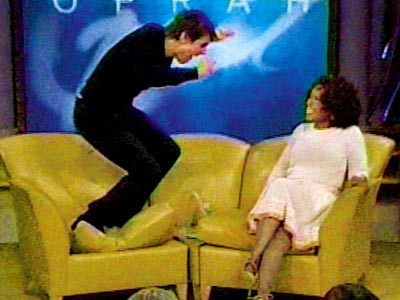
Although not the most annoying part of college, this kid ranks pretty high on my list of irritating creatures. Granted, we don’t all have hours and hours to park in front of “Oprah” every morning, but this brand of culture snob claims that never in his life has he seen an episode of say, “Gilmore Girls.” Let me tell you something about this snarky pain in the you-know-what: He’s LYING! With the exception of Amish people, everyone watches TV. Undoubtedly, this liar has seen more episodes of “Elimidate” than he cares to admit. Therefore, out of his overwhelming shame bursts forth the urge to lie. Why does he lie? To belittle you. Be happy that the people you work with kick back in front of the tube like it’s their job. Some of them may be as dumb as the actual contestants on “Elimidate,” but at least they’re not cowardly liars.

9. Cell Phones.
I’m a hypocrite. I love my cell phone. It’s something to study while standing awkwardly in the elevator, you can take pictures of your friends, and with one flip of a button you can look popular (even if you are only calling Dial-a-Weather). BUT when people forsake real human communication to talk to their childhood friends in Maine for the few seconds it takes to get from Class A to Class B, I kind of feel like crying. No longer do we see clusters of students, arms linked, chattering away about clambakes and Frisbee (as in college brochures the world over). Now all that remains are hunched and shifty-eyed shells clutching their little cellular “friends” to their half-deaf ears.

8. The Professor’s Pet.
This kid always has his hand raised. He comes into the room with it raised.
He sits down with it raised. It remains raised, the elbow cradled in the other hand to beat fatigue while the professor speaks. Then, when the professor finally decides that this kid will not, in fact, go away, and he is called on, he comes out with a gem like, “Well, when I was reading MARX yesterday, after reading JOYCE’S collected works, I decided that Communism was probably a true elucidation of the metaphysical entities that people are carbon-based juxtaposition of society and consumer-driven paradigms.” Yes. They say something that, albeit peppered with big words and big names, makes NO sense. Be aware: every time one these pompous parasites opens his mouth, someone throws a ferret in a fire pit, a’ la “Beast Master” (Which you have seen. Don’t lie. You saw it on Spike TV last week with the rest of us.) These people never leave the collegiate realm; they just collect degree after degree, saving the rest of the world from their inane babbling.

7. Staying up unnecessarily late.
You have an 8 a.m. class you have to be awake for.... but everyone else is up and you’ll look like a loser if you go to bed early (which is, in college world, any time up until 1 a.m.). So... you stay up. You don’t really do anything. You move stuff around in your room, you talk to someone on IM, you watch an episode of “Arrested Development” on DVD, or you stare at Facebook for awhile. Then you fall triumphantly into bed around 1:15 a.m., only to be dragged from your deep slumber barely six hours later. College kids are stupid. Sleep is goo…… Sorry, just dozed off for a minute there.

6. Parties.
You always think you’ll like them. You look forward to them. Then you stand awkwardly in a room crammed with slightly smelly, not particularly attractive people all attempting to rub against each other whilst clutching their huge red cups of cheap beer. Inevitably, someone will spill said cheap beer on you. You will be pushed into someone with whom you do not wish to make contact, and you will see some girl’s thong tha-thong thong as she gyrates in a drunken (and embarrassing) manner in her tiny denim skirt and Uggs. Be thankful that you are now legal, all of your friends are legal, and ding-dong! the clandestine apartment party is dead.

5. Uggs.
Ok... why? WHY do people still insist on killing sheep and wrapping them around their feet? If you’re gonna wear slippers, at least wear ones with bunny ears and please, for the love of all that is holy, do NOT tuck your ratty sweatpants into your sheep-carcass shoes. If you insist on looking like a refugee, do so in the privacy of your own home. Uggs, while they are the dress code on college campuses, are far less prevalent in the “real world.”

4. Bad emo music.
For some reason we all start listening to it, applying it to our lives, and subsequently crying.

3. Freshmen.
Do I even need to elaborate? They’re small, they’re overeager, they scavenge for food in the garbage... Wait, those are squirrels. You get what I mean.

2. Frats and Sororities.
Alphas and Thetas and Betas and Deltas and Zetas. Why dress it up with fancy Greek words? You bought your friends, you sing stupid “secret” songs, and if you’re a girl you MUST wear pointy shoes. Need I even mention hazing? No thanks, I’d rather make my friends the old-fashioned way: by offering to do their homework.

Drum-roll please... Here’s the number one worst thing about college.

1. It’s a freaking small world after all.
College campuses, even if they boast a 2,000 person surplus, are tiny. So, you constantly run into people you’d rather not see: that friend from freshman year who you decided you didn’t like, that guy you turned down once, that guy who turned you down, someone you made out with in a drunken haze, a professor who flunked you, an ex, the list goes on. One day you’ll be walking to class and minding your own business, and you’ll see (insert undesirable person here) strolling towards you. Here comes the moment of truth: do you…
A. Say “Hi” and keep walking.
B. Stop and catch up with (insert undesirable person here) because your martyr complex is acting up.
C. Cough and, in that brief moment, pretend you don’t see said person.
D. Look at said person and don’t say “Hi.”
E. Start to say “Hi” and realize said person is purposely ignoring you, so go home, listen to emo music and cry whilst mulling over what you could have done to hurt said person.
At least in the real world people come and go. In college there’s no escape.

I hope I have alleviated some of the depression you all must feel when looking back at your collegiate glory days. Any time you feel the icy grip of reminiscence taking hold of your little hearts, I advise you to drop the Elliot Smith CD, step away from the Proust, and sit down in front of your dear friend the television. Because, damn it all, now you can.

Labels:


Read more!